just play
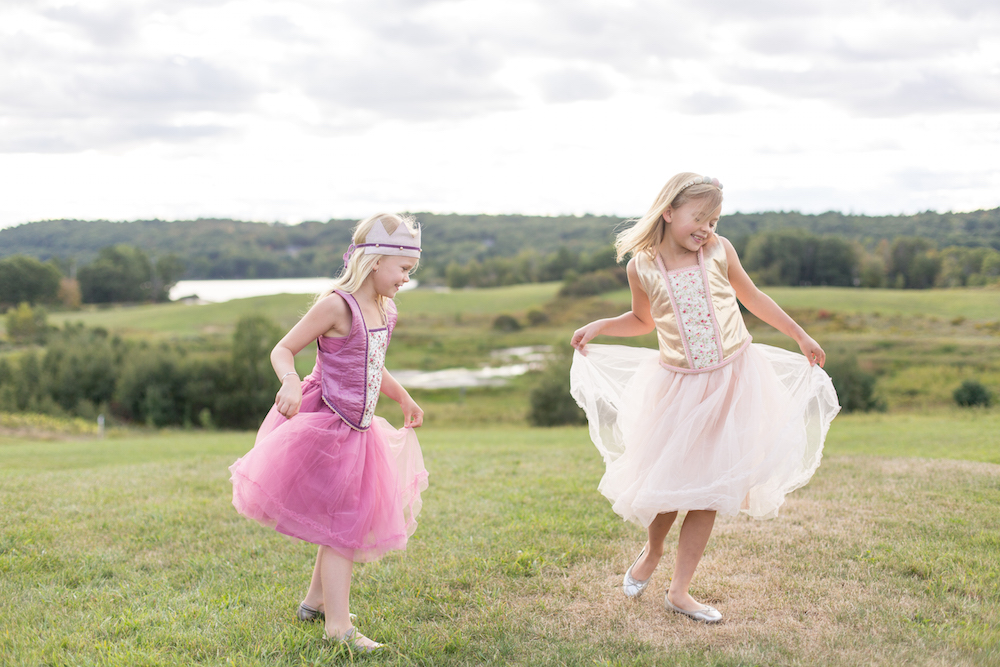
I love to listen to my girls as they imagine their way through the free time after school, before they beg for time on the iPad to watch a T.V. show or play an io game on the computer. This is the fleeting season in life when they use their imaginations more than they use their cell phones (which they don't yet have), and when playing is still the best way that they learn- about themselves, about each other, about life.
So why is play so good for these girls? It's not just my individual assessment, though I like to think that I have intuitive understanding. Studies have shown that in creative, unstructured play, children use neurological pathways that would otherwise be diminished or even disappear if not used. As they create scenarios in which they are relating to one another, taking on different and varied roles, they are also learning about conflict resolution. It is inevitable that in the course of their "games," they will bump up against one another, and in character, they can make choices that will either move the story forward, or cause one or more of the players to revolt. Even children who are usually quiet in larger groups can find their voice when they are acting through their imagination, whether it is by themselves or with others.
One of the major trends in public school education is that in order to make time for increased math and reading standards, something has to be cut. It's like a pie that is being cut into parts. There is a finite amount of pie, but if you increase the size of one slice, the other slices need to be diminished or even taken out. So what is taken out of the pie? In general, recess and creative arts, such as music, art or performing arts.
"When children are allowed to play without being told what they specifically have to do, they become more focused, have greater attention spans and improve their academic skills," says social worker Heather Gilmore (MSW, BCBA, LLMSW).
Now I'm not saying that my kids don't need to develop ability to sit and finish two pages of math, or write biographical sketch, or analyze a poem. There are benefits to each discipline. But even us adults could benefit from letting ourselves daydream a bit, play around with colors on a palette or create a story from scratch.
Just saying.
soli deo gloria

Comments
Post a Comment